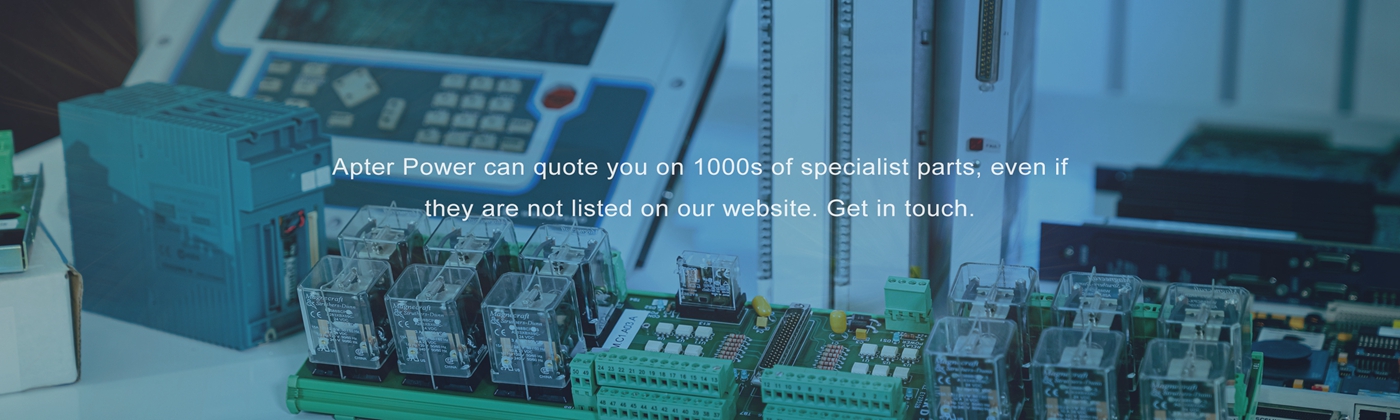
Managing the hardware lifecycle of the Emerson Ovation Distributed Control System (DCS) is critical for ensuring plant availability, operational efficiency, and long-term asset reliability. Introduced as a high-performance automation platform for power generation, water, and wastewater industries, Ovation components follow a distinct evolution path from initial deployment to ultimate obsolescence.
Emerson classifies Ovation hardware components into clear support tiers to help plant engineers plan maintenance strategies, inventory management, and system migration roadmaps.
· Active (Active Sales): Current-generation hardware actively manufactured, fully supported, and recommended for new projects and expansion.
· Mature (Limited Production): Hardware remains supported, but manufacturing decreases as newer technologies take priority. Factory lead times may increase by 30% to 50%.
· Extended (End of Direct Sales): Direct original equipment manufacturer (OEM) sales end. Support transitions primarily to standard repairs and existing stock fulfillment.
· Obsolete (Legacy): OEM production and standard repair services officially cease. Spare parts must be sourced through authorized power equipment distributors and specialized supply chain partners.
Ovation control architectures rely on precise module specifications to ensure real-time execution and fault isolation across mission-critical loops.
|
Hardware Series |
Typical Module Types |
Core Specifications / Parameters |
Typical Lifecycle Status |
|
OCR400 / OCR1100 |
Controller Processors |
High-speed execution, redundant Ethernet ports, 100Mbps bus speed |
Extended / Obsolete |
|
OCC1500 / OCC1800 |
Advanced Controllers |
Multi-core processing, cyber-secure boot, expanded internal memory |
Active |
|
Standard I/O (1C/5X) |
Digital/Analog I/O Cards |
24VDC, 4-20mA, HART pass-through, field channel isolation |
Mature to Extended |
|
Compact I/O |
High-Density Modules |
DIN-rail mounted, reduced footprint (up to 50% cabinet space saving) |
Active |
|
Ovation Network Switches |
Fast Ethernet / Gigabit Switches |
Redundant power inputs, managed switch security protocols |
Active / Mature |
Replacing an entire DCS can require capital expenditures exceeding $1 million to $5 million depending on facility scale, along with weeks of planned downtime. Utilizing strategic lifecycle management mitigates operational risks while optimizing maintenance expenditure.
Maintaining a pre-screened critical spare parts inventory minimizes unplanned outages. Maintaining redundant controller modules, power supplies, and critical loop I/O cards on-site drastically cuts mean time to repair (MTTR).
Rather than a full system overhaul, facilities frequently execute modular upgrades. For example, upgrading legacy OCR400 controllers to modern controller architectures allows plants to retain existing 1C/5X field I/O wiring, reducing installation downtime by up to 60%.
For hardware in the Extended or Obsolete phase, partnering with reliable industrial automation suppliers provides access to fully tested spare modules, functional testing, and warranty protection.
Industry data indicates that unplanned downtime in power generation facilities costs between $10,000 and $50,000 per hour. With over 30% of global DCS installations operating beyond their nominal 15-year design life, systematic lifecycle monitoring directly impacts revenue protection. Up to 60% via phased controller-only upgrades
By identifying aging hardware modules early and establishing dependable component supply lines, control engineers can eliminate single points of failure before unexpected hardware degradation occurs.
For reliable supply of active, legacy, and hard-to-find Emerson Ovation hardware modules, replacement spare parts, and system components, contact our team:
· Company: Apter Power
· Sales Manager: May
· Email: info@apterpower.com
· Phone / WhatsApp: +86-18106909650
Satış : 32D Guomao Building,No.388,Hubin south Road,Siming district,Xiamen city 361009,China
Bizi şimdi ara : +86 18106909650
E-posta : info@apterpower.com